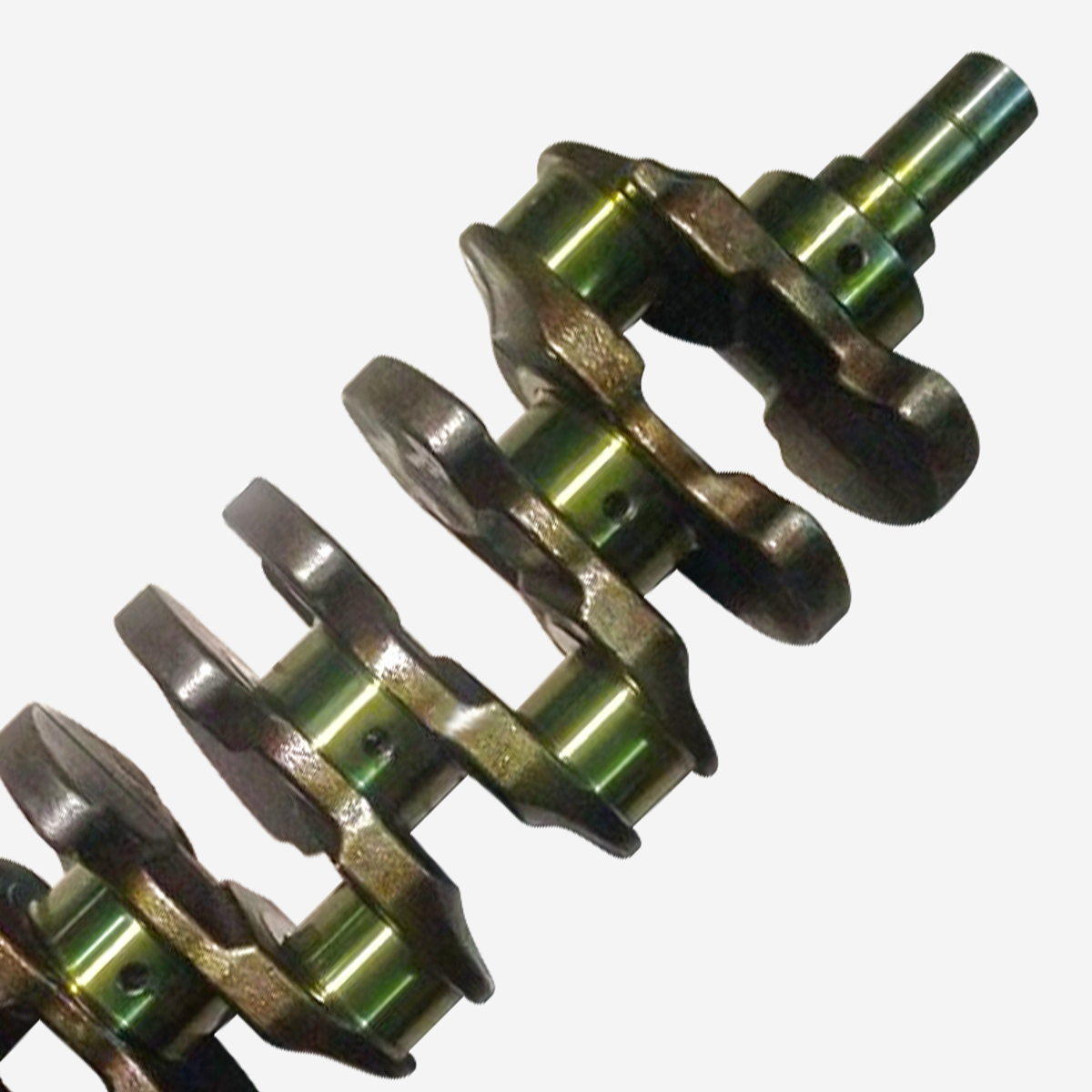
The engine crankshaft is a vital component of an internal combustion engine, playing a crucial role in converting the linear motion of the pistons into rotational motion. The main rotating part of the engine, after the connecting rod is installed, can accept the up and down motion of the connecting rod into cyclic motion.In simple terms, the crankshaft is the backbone of the engine, responsible for driving various parts of the engine and ultimately powering the vehicle.
The Function of the Crankshaft
The crankshaft serves several essential functions within an engine system. One of its primary functions is to convert the reciprocating motion of the pistons into rotational motion, which is then transferred to the transmission system to drive the vehicle. This process is made possible by the offset cylindrical sections on the crankshaft known as crankpins, which are connected to the connecting rods of the pistons.
Furthermore, the crankshaft plays a crucial role in maintaining the timing and synchronization of the engine components. It houses the timing gears or pulleys that are connected to the camshaft, ensuring that the intake and exhaust valves operate in perfect harmony with the piston movements.
Another key function of the crankshaft is to balance the forces generated by the reciprocating motion of the pistons. The counterweights attached to the crankshaft help offset the imbalanced forces, reducing vibrations and ensuring smooth operation of the engine.
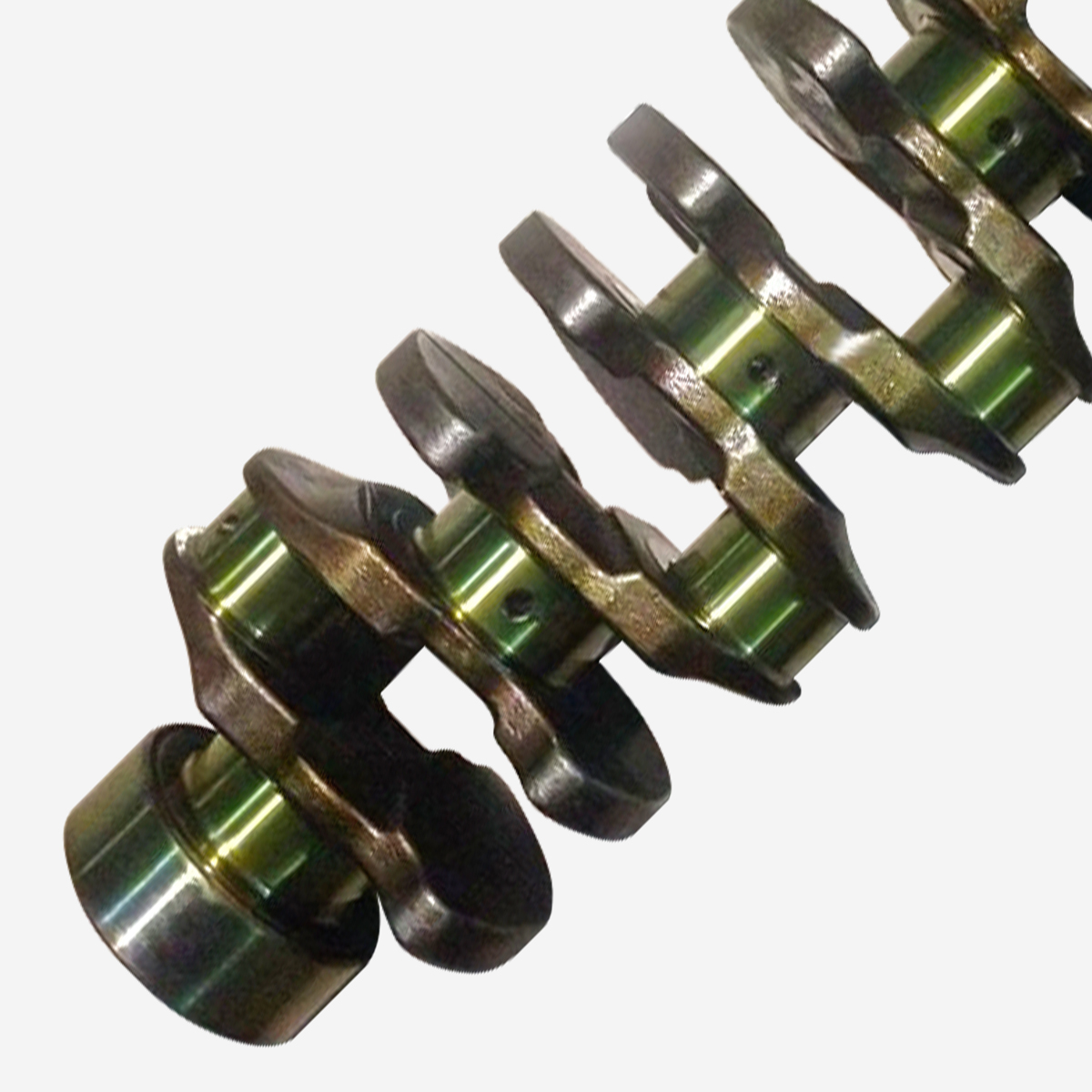
The Working Principle of the Crankshaft
The working principle of the crankshaft is based on the simple yet ingenious concept of converting linear motion into rotational motion. As the pistons move up and down in the engine cylinder, they transmit force to the connecting rods, which are in turn connected to the crankshaft through the crankpins.
When the piston moves downwards during the power stroke, it exerts force on the connecting rod, causing the crankshaft to rotate. The offset crankpins ensure that each piston's motion is translated into a rotational force, allowing the crankshaft to rotate continuously.
The counterweights on the crankshaft play a critical role in balancing the forces generated by the reciprocating motion of the pistons. By strategically placing these counterweights, the crankshaft can offset the vertical forces, reducing vibrations and ensuring smooth operation of the engine.
In essence, the crankshaft serves as the mechanical heart of the engine, converting the chaotic reciprocating motion of the pistons into the controlled rotational motion needed to drive the vehicle. Without the crankshaft, the engine would not be able to harness the power generated by the combustion process effectively.
In conclusion, the engine crankshaft is a sophisticated yet fundamental component of an internal combustion engine. Its ability to convert linear motion into rotational motion, balance forces, and maintain synchronization within the engine system underscores its importance in powering vehicles and machinery efficiently.
In addition to crankshaft, 1D company has many main products: pistons, piston rings, spark plug, Glow plug, ignition coil, cylinder liner, fuel injector, Full Gakset, etc.
If you want to know more about our products, please contact us.
Contact us to learn more
Whatsapp : +86 18144837660
Wed : www.1dauto.com
www.1doem.com